
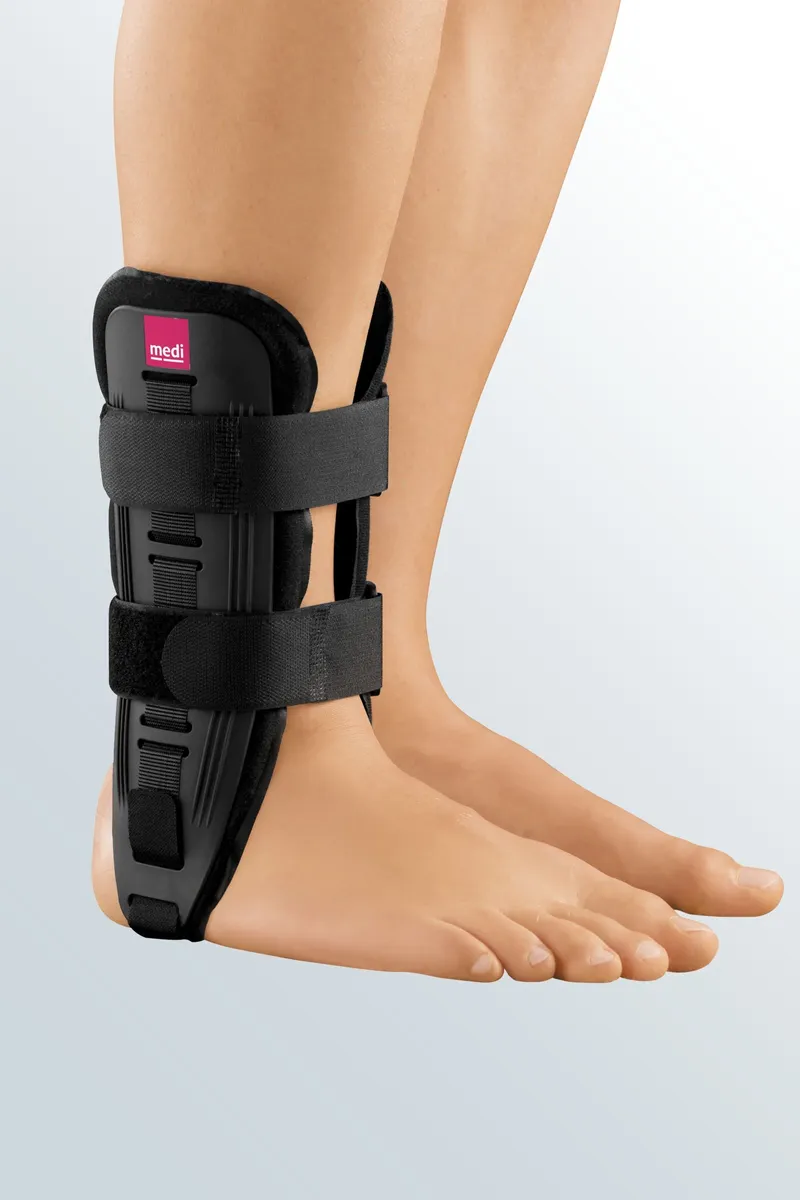
M.step® Ankle Brace / M.step Kids / M.step athletic
Ankle brace for stabilisation in one plane
€60.00
M.step® ankle brace for instability of the ankle
Light foam gel pads for distribution of pressure
Optimal patient care thanks to different versions
Can be worn in a shoe
The M.step® brace has a light foam gel pad that adapts to the anatomical structures of the ankle, making an even pressure distribution possible. Thanks to the wide range of variants – from Standard to Athletic and the variant Kidz – patients are cared for according to their individual needs. An additional benefit: the ankle brace for stabilisation of the ankle can also be worn inside the shoe.
M.step® is used for all indications in which a stabilisation of the ankle joint with limtation of pro- and supination movement is necessary, such as:
Following ligament injuries to the upper ankle joint (grade 2 to 3) (posttraumatic / postoperative)
Following sprains
For Chronic instabilities of the ankle
M.step® protects the ankle from unhealthfull inner and outer rotation movements (pronation and supination movements) of the foot. At the same time, the integrated separator pads ensure a good pressure distribution and provide additional protection for the ankle.
The M.step® brace is characterised by its rigid and anatomically pre-shaped half shells. These can be flexibly adapted to the swellings of the ankle. Thanks to its displaceable and individually adjustable straps, the ankle brace M.step® offers a high level of comfort. The brace also convinces users with its lightweight and skin friendly material.
Mode of action
Stabilisation of the ankle joint
Protection from unhealthfull pronation and supination movements and the ankle
Integrated separator pad provides good pressure distribution for additional protection of the ankle
Intended purpose
Ankle brace for stabilisation in one plane.